I am quite late in reflecting on the European Citizen Science Association (ECSA) conference I attended at the beginning of March. But I still have to write this post because:
- the conference’s welcome ceremony began with ice fishing;
- it included a pitch by a mermaid;
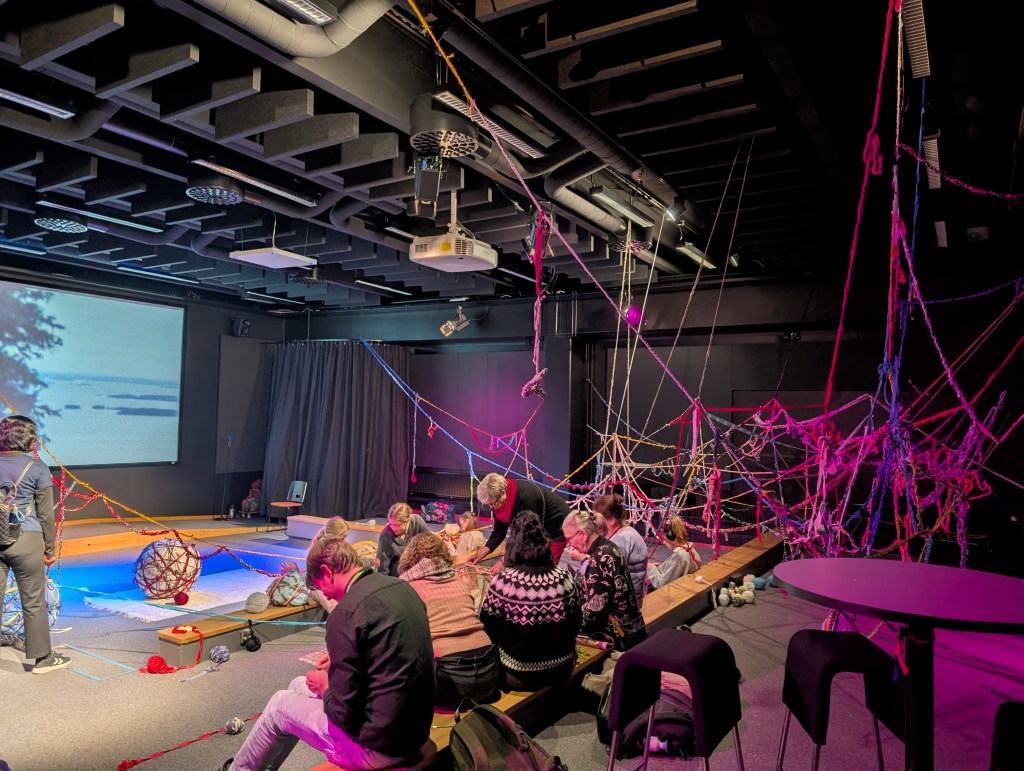
- in your free time, you could do some crocheting and think about Deleuze and Guattari at the Rhizome Salon;
- finally, its closing featured a keynote speech by the former First Lady of Iceland, Eliza Reid, and a children’s address during which I could not hold back tears.
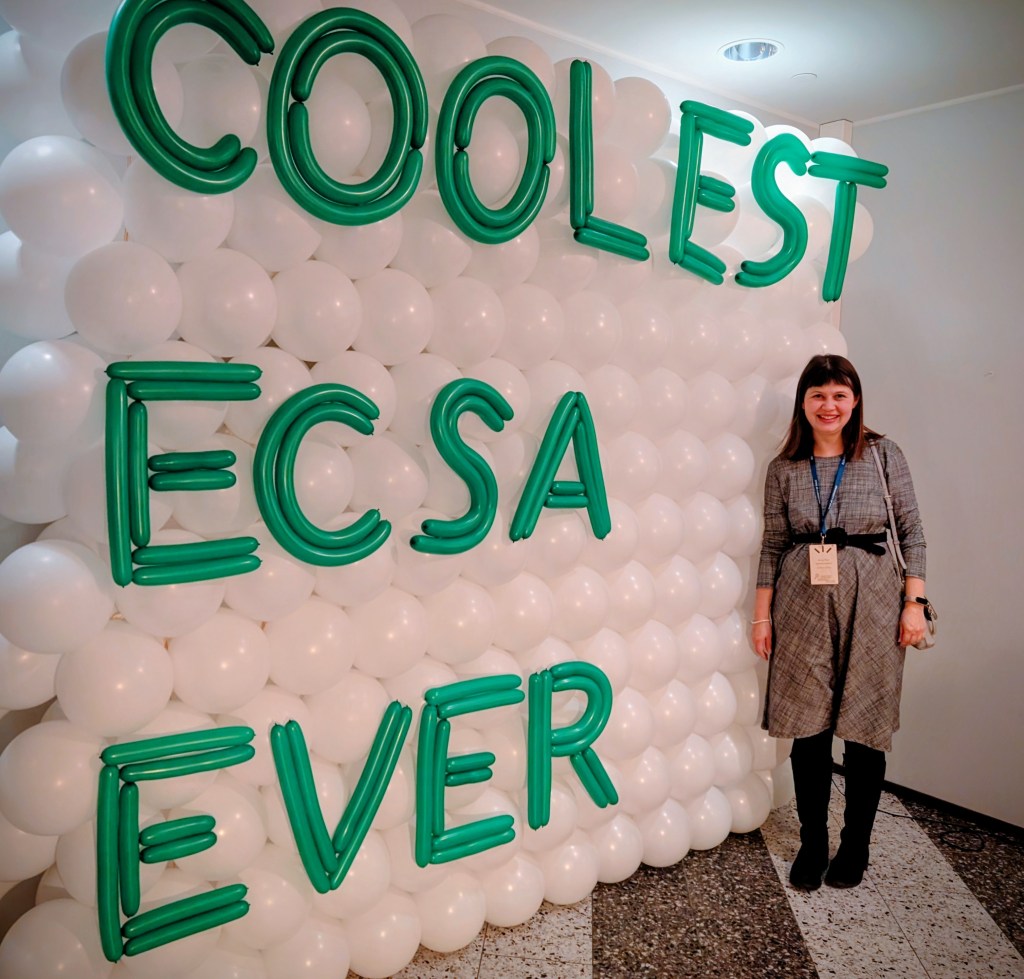
- anyway, this most probably was…
Citizen science is commonly defined as a form of open collaboration in which non-academic individuals participate voluntarily in the scientific process. Participation in citizen science projects also increases awareness about different topics such as climate change, biodiversity loss, or habitat degradation. In the social sciences and humanities, this concept is still quite vague, I must admit. Maybe because of that I only met a couple of other anthropologists during my whole week at the conference.
One could argue that we work with non-academic individuals by definition of our profession, and our type of citizen science is often referred to as participatory action research. Nevertheless, I found it useful to engage with researchers and NGO activists focusing on citizen science methodologies, dissemination of results, and raising awareness among diverse audiences. This is a valuable exercise for thinking beyond our discipline and familiar methods.
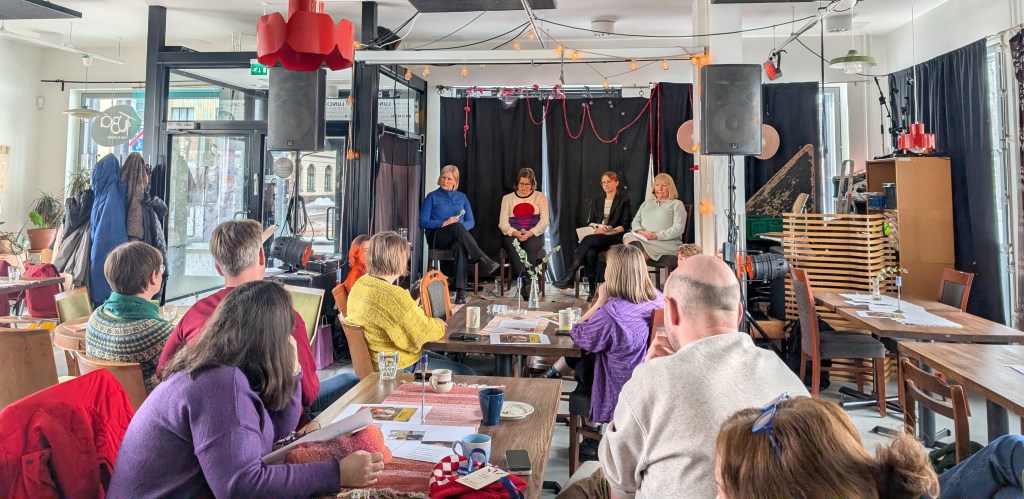
The whole arrangement and spirit of ECSA were rather new to me. Rooms were regularly packed, so at least twice I helped source extra chairs to fit everyone interested. Discussions were extremely lively, and everybody, it seemed, was interested in practical aspects of research: how to attract participants? how to design an evaluation survey? how to follow up after the project is finished? how to go beyond the dry wording of grant reports when assessing a project’s impact?
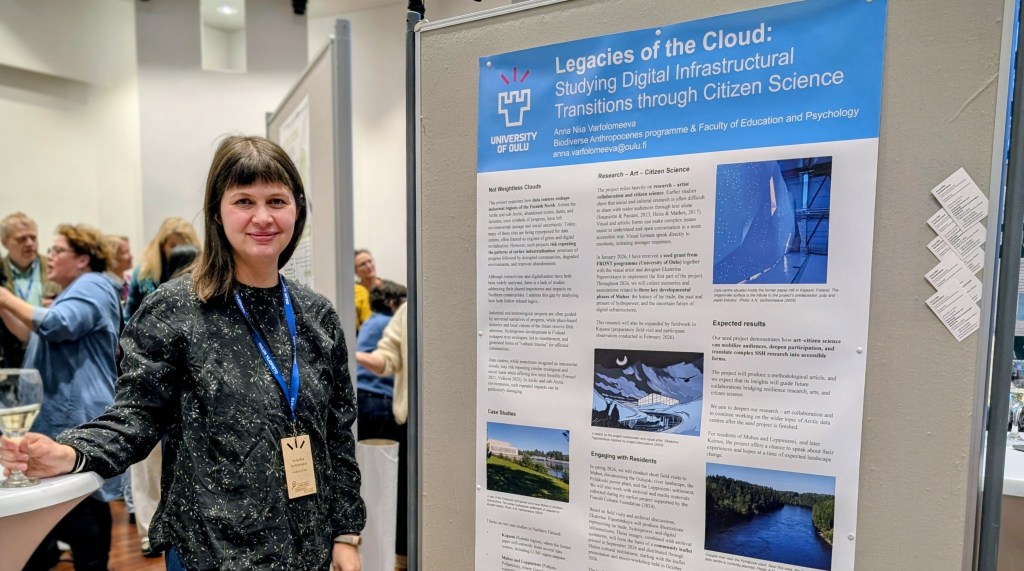
When I presented my poster, I was similarly faced with very practical questions and advice (for example, to offer food to the participants of my planned workshop) rather than discussions about data centre representations. The poster session, like other events at ECSA, was crowded.
It was new to see so many people buzzing with ideas and striving for action, rather than sharing the blues of academic life as we often do at social events (for a reason, of course). But I understood why more than 650 participants from different corners of Europe gathered in Oulu: this spirit is truly refreshing. Almost as much as ice fishing.
The next ECSA will take place in Lisbon, much further from the Arctic Circle, but I have no doubt it will be just as cool as this one.
 Anna Niia Varfolomeeva
Leave a comment