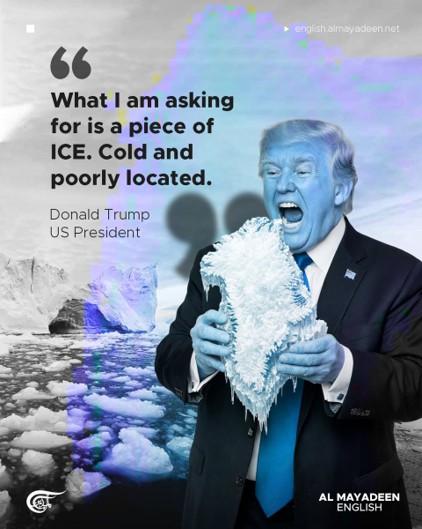
During the heated Greenland controversy that intensified in January 2026, Donald Trump famously said: “What I’m asking for is a piece of ice, cold and poorly located… It’s hard to call it land.”
This statement reflects a much wider and deeply rooted issue: the Arctic and sub-Arctic regions have long been imagined as “nothing” – as an “empty space” supposedly lacking meaning.
Such harming representations continue today, as new technologies and industries once again present the North as being empty, abundant, and endlessly resourceful. It becomes easy to forget that, for many, it is a long-lived and deeply loved place.
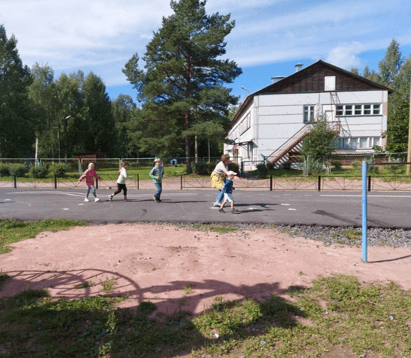
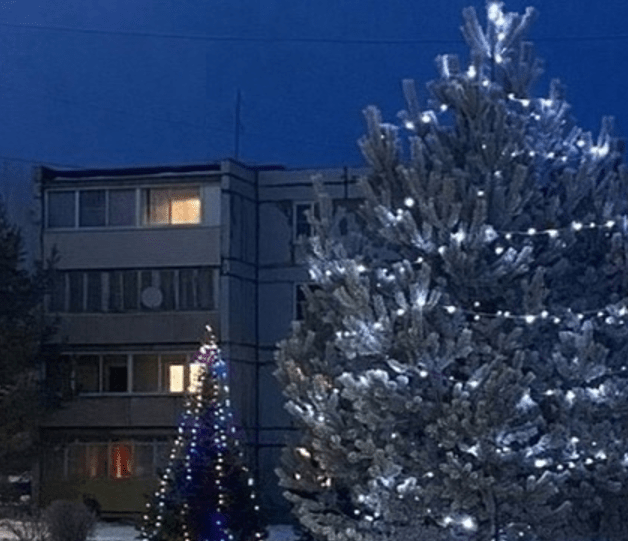
I first encountered the notion of “nothingness” in my field notes from the settlement of Kvartsitnyi in Karelia, Northwestern Russia. I carried out field research in Kvartsitnyi between 2015 and 2021. Once a prosperous mining community, Kvartsitnyi has struggled with unemployment and a general sense of insecurity since the closure of its pillar industry, a stoneworking quarry, in the early 2000s. However, even though many residents describe the place as “nothing” before or after the industry, they remain strongly attached to it and refuse to leave.
My concern is that the representations of “nothingness” persist as new technologies enter the North. If we scroll through photos of wind turbines in the Arctic, they are usually depicted as standing alone among the white snow and abundant empty land. Similarly with data centres: in 2024, Alaska governor Mike Dunleavy pitched the state as the future data centre hub, saying: “We have more available fresh water than just about every other state. We have copious amounts of land.” While a lot is said about the abundance of land in the North, the people living there are more rarely remembered.
I recently spoke about this problem at a Brown Bag seminar at the University of Oulu, where the lively discussion afterwards showed that many colleagues share these concerns. This question is also at the heart of my current research, with two publications on the topic underway.
But the challenge is not only academic. A newspaper article I read about the former mining settlement of Nanisivik in Canada which is struggling in ways strikingly similar to Kvartsitnyi, was titled “Great White Nothing.” The phrase stayed with me. How can we, as researchers, communicate more effectively with industry and policymakers so that the Arctic is seen as more than a “Great White Nothing,” but as a lived, complex, and meaningful place?
 Anna Niia Varfolomeeva
Leave a comment