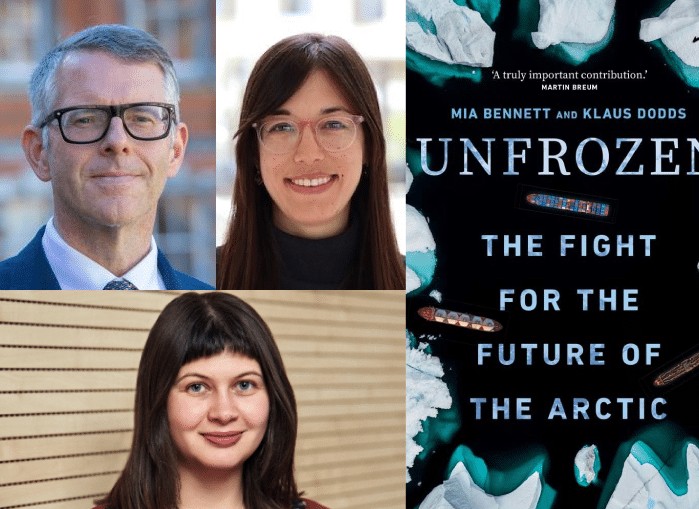
Last spring, I was invited to engage with the new book Unfrozen: The Fight for the Future of the Arctic in two capacities: as a podcast host interviewing the authors and as a reviewer to take part in the book symposium by Perspectives on Politics.
And last week, both the podcast and the symposium were published on the same day!
The academic year began with a new happy commitment. I have recently signed a contract for my first academic monograph with Central European University Press (CEU Press).
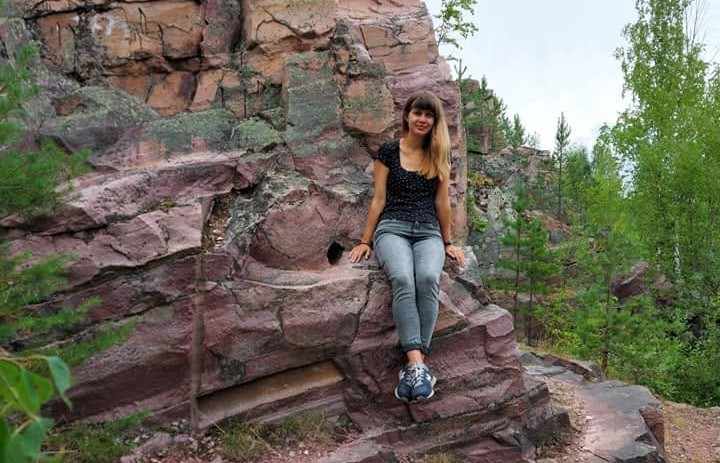
The book, tentatively titled Living with Stone: Extraction, Environmental Change, and Loss in Northern Russia, will be published in the “Environmental History of Central and Eastern Europe” series. It will develop the main themes of my PhD dissertation, focusing on Indigenous Veps’ connections to decorative stone.
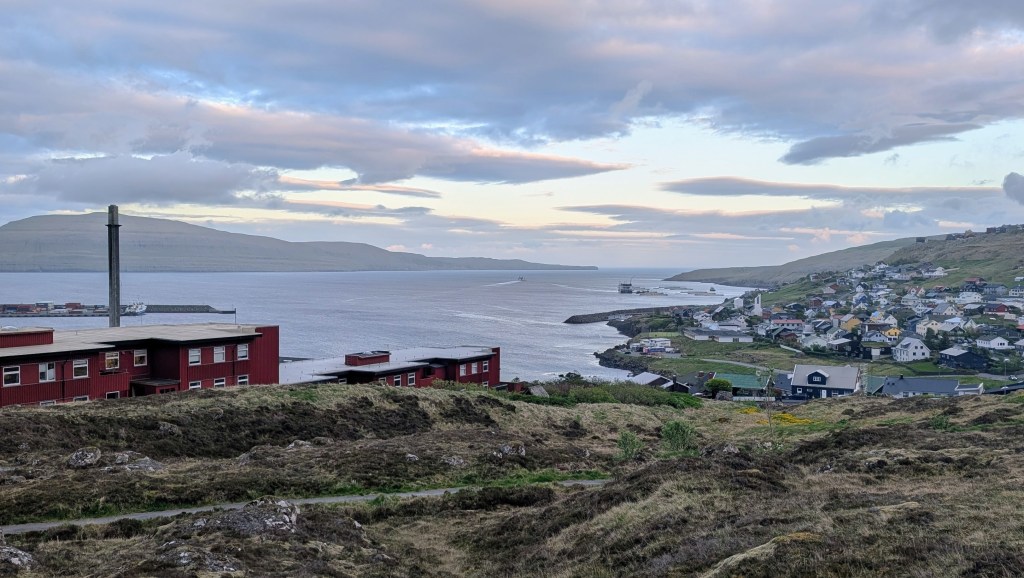
A conference where you are slightly afraid to leave the guesthouse because of the strong wind bending low-growing trees down. A conference set amongst stunning landscapes, where fish and chips are sold next to woolen sweaters, and coinciding with a traditional Faroese whale hunt. Yes, the UArctic Congress 2026 at the Faroe Islands (sometimes referred to as The Edge of the World) was a very unique conference experience.
My participation was seemingly straightforward: I presented my research on the impact of energy transition on more-than-human landscapes in the panel on meaningful stakeholder engagement co-organized with my colleagues from UArctic Thematic Network on Arctic Sustainable Resources. However, large academic events represent much more than a presentation slot.
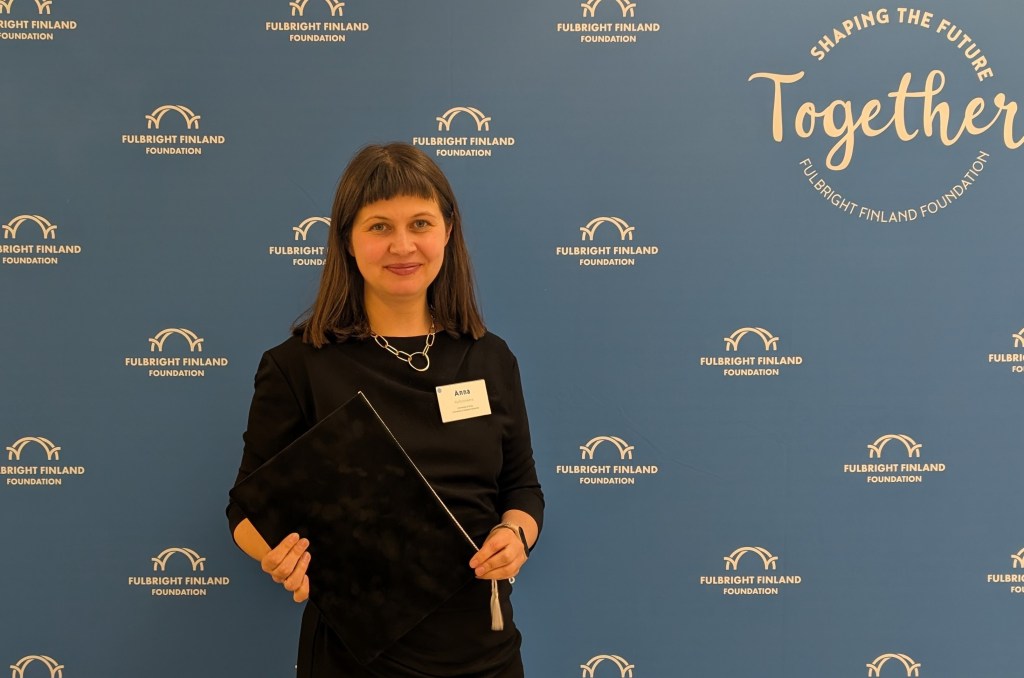
Fulbright scholarship recipients often call themselves family. Before leaving Oulu for the orientation day with Fulbright Finland in Helsinki last week as a new grant recipient, I had been wondering whether this sounds too affectionate.
After spending the day with them, I see that there is indeed a certain aura among Fulbrighters: openness to conversation, genuine interest in other cultures, ease and academic rigour, all combined. This is an atmosphere where I felt at home.
My comparative project on data centres in post-industrial Arctic settlements recently received funding from Fulbright, and next spring I will be visiting Alaska for the first time ever, building collaborations with the University of Alaska Fairbanks.
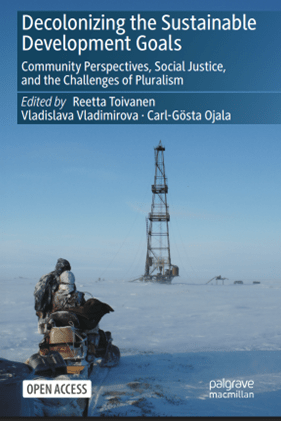
The long-awaited edited volume “Decolonizing Sustainable Development Goals” has been published open access. I am extremely grateful to the editors for all their efforts in making this book available beyond library access and institutional affiliations.
This book analyzes the well-known SDGs from a very important but rarely addressed angle: Indigenous and local perspectives. It shows why the goals cannot be taken for granted, but need to be critically discussed to limit conflicts and tensions during their implementation.
When I was a PhD student, my supervisor told me I had a true luxury: time to concentrate on my writing. At that time, I was puzzled: I certainly did not feel privileged. However, recently I keep returning to these words as tasks interweave as a web: revisions to respond to, co-teaching, meetings, reimbursement claims, Finnish lessons, contacting local organizations for a citizen science project, and planning for upcoming deadlines.
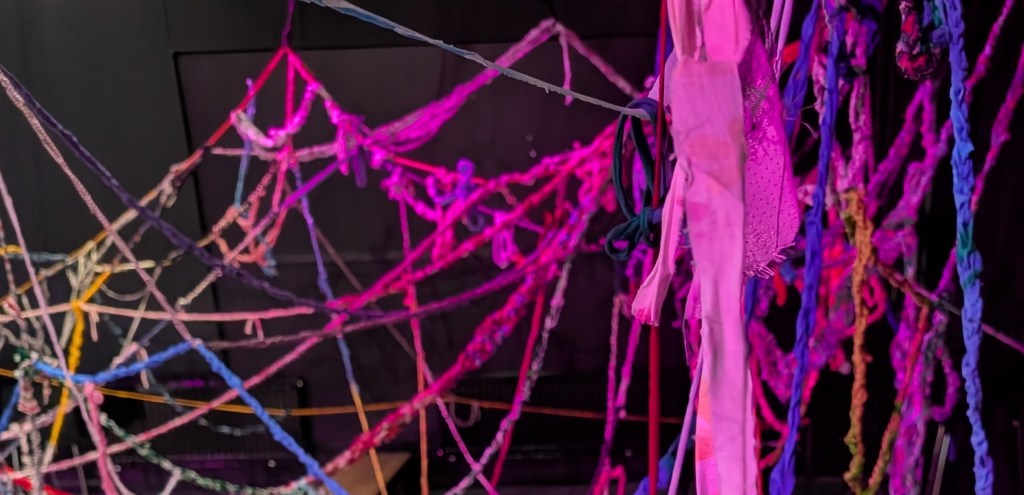
This interweaving is especially visible after grant applications. For weeks prior to submission, I have to put other work aside. But after I click “submit,” it is hard to relax as the web of assignments reappears in my calendar and, more importantly, my mind, – resembling, in some way, my recent photos from the art-science conference side event.
The web is an interesting metaphor, as this is also the way I think about my topic – interrelation of industries and technologies in Arctic landscapes, points of connection across times and geographies, or intersections of physical and symbolic lines. Recently, however, I have been thinking: how to approach the daily web of work as a meaningful arrangement, not a daunting accumulation of assignments?
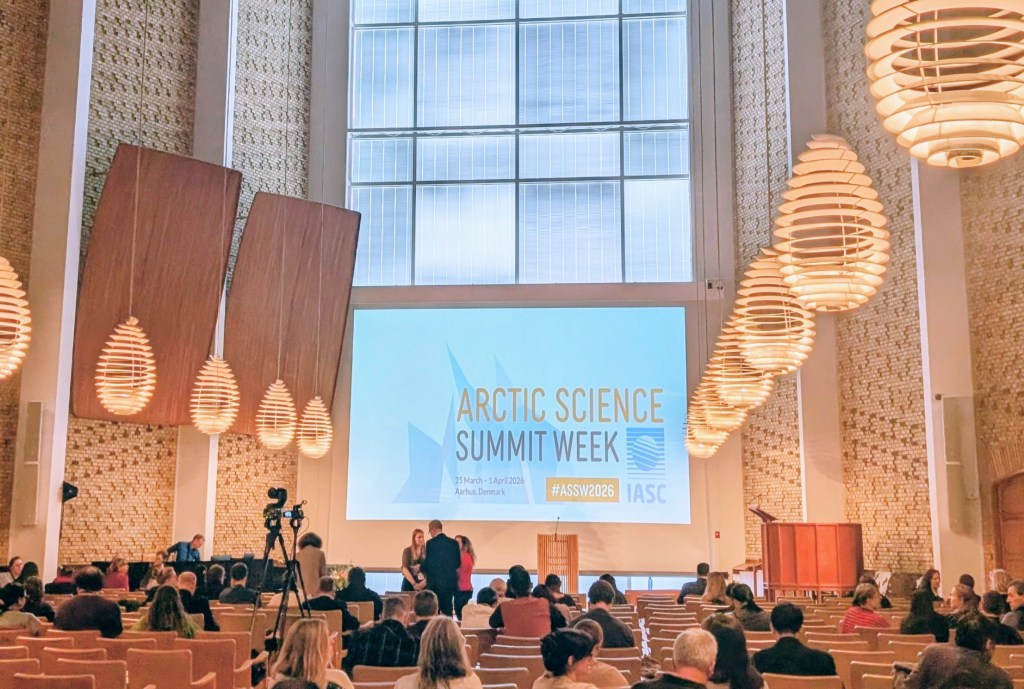
Since 2021, I have served as the Secretary of Social and Human Working Group at the International Arctic Science Committee. I have just returned from the annual Arctic Science Summit Week, this year held in Aarhus, Denmark, where, for the fifth time, I was responsible for preparing and hosting the Working Group meeting. This is an all-day event: we began the meeting at 8:30 am and finished at 6:30 pm, ten hours in a row!
When I envisioned this blog post on the evening train to Aarhus, I thought I would write: I remember my first WG meeting as a very new Secretary. It required such an investment of energy, and I was so worried and tired, but this year I managed the same meeting effortlessly…
It didn’t happen like that. There were once again unpredictable last-minute changes: presentations needed to be transferred, videos displayed, minutes taken, and Zoom links and agendas sent. I was, once again, worried and tired.
What has changed? I knew I would manage nevertheless, and I was not surprised when the meeting ran smoothly in the end. I still cannot prepare for everything, but I believe in myself more than I did five years ago.
the conference’s welcome ceremony began with ice fishing;
it included a pitch by a mermaid;
in your free time, you could do some crocheting and think about Deleuze and Guattari at the Rhizome Salon;
finally, its closing featured a keynote speech by the former First Lady of Iceland, Eliza Reid, and a children’s address during which I could not hold back tears.
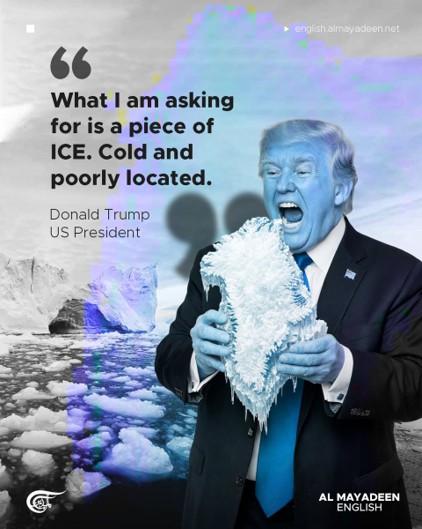
During the heated Greenland controversy that intensified in January 2026, Donald Trump famously said: “What I’m asking for is a piece of ice, cold and poorly located… It’s hard to call it land.”
This statement reflects a much wider and deeply rooted issue: the Arctic and sub-Arctic regions have long been imagined as “nothing” – as an “empty space” supposedly lacking meaning.
Such harming representations continue today, as new technologies and industries once again present the North as being empty, abundant, and endlessly resourceful. It becomes easy to forget that, for many, it is a long-lived and deeply loved place.
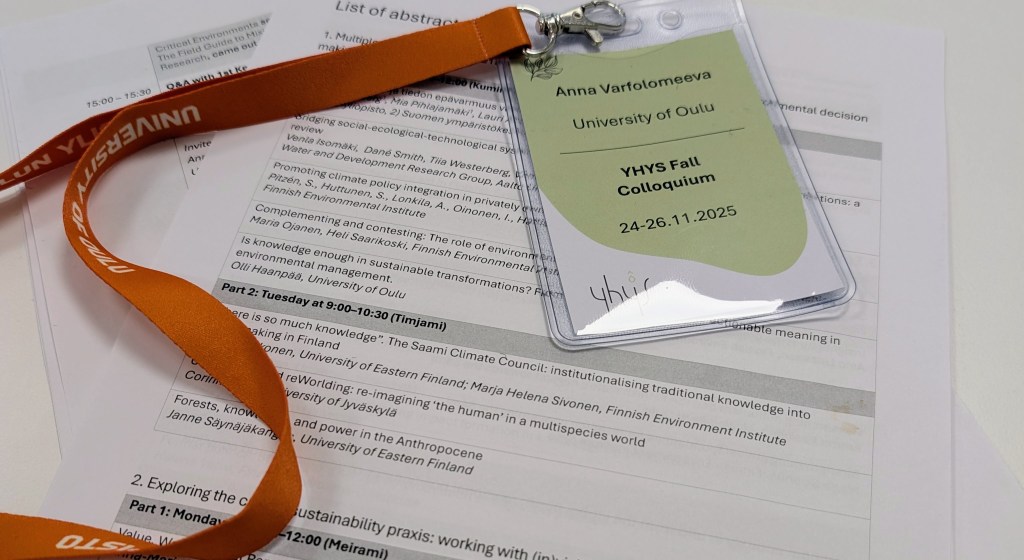
Last week, Oulu hosted the annual Fall colloquium of the Finnish Society for Environmental Social Science (YHYS). This was my first experience with YHYS, and although I had only just recovered from a rather fierce virus and wasn’t at my best, I was quickly drawn in by the colloquium’s vibrant atmosphere. My main sources of inspiration, however, may sound unusual: nothingness, failure, and the absence of words.